PatternsNo. 01 · Machining
Tool marks that repeat on four continents.
Striations, bore holes, saw kerfs and flat-planed faces that look mechanical. Four continents, no contact between them, and stone their documented toolkits were not supposed to cut.
23 sites · 10 countriesEquirectangular · every dot is a site in the Atlas
Watch the comparison · 5 studies
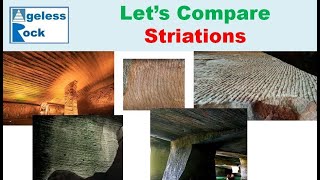 Mysterious Striations at megalithic sitesAgeless RockThe core comparison
 Quiz: Mysterious Megalithic Culture Gear TracksAgeless RockGear-track forms, posed as a test
 Bazda CavesAgeless RockTürkiye · the reference surface
 Compare Cave DwellingsAgeless RockRock-cut interiors, region to region
 Mysteries of ChinaAgeless RockChinese sites surveyed together
Comparative studies rather than site walkthroughs, which is why they never fitted on a site page.
What the pattern is, and what it is not: the argument in full
Each of these has a local explanation, and the local explanations don't resemble each other. Bazda's grooves are Roman quarrying. Longyou's are a lost Chinese chisel technique. The Serapeum's boxes are Ptolemaic bull burials. Every one is plausible on its own ground. None explains why the marks look alike.
Two caveats. Similar marks can come from different processes; appearance is not method. And a photograph flattens the evidence that would settle it: depth, pitch, tolerance, tool-nose radius. These are the best substitute for standing there with a straightedge. They are not measurement.
Every site in the Atlas that carries it · 23 across 10 countries
Bolivia
Egypt
Mexico
United States
The other patterns
Dimmed patterns are tagged across the Atlas but have no comparative study written yet.