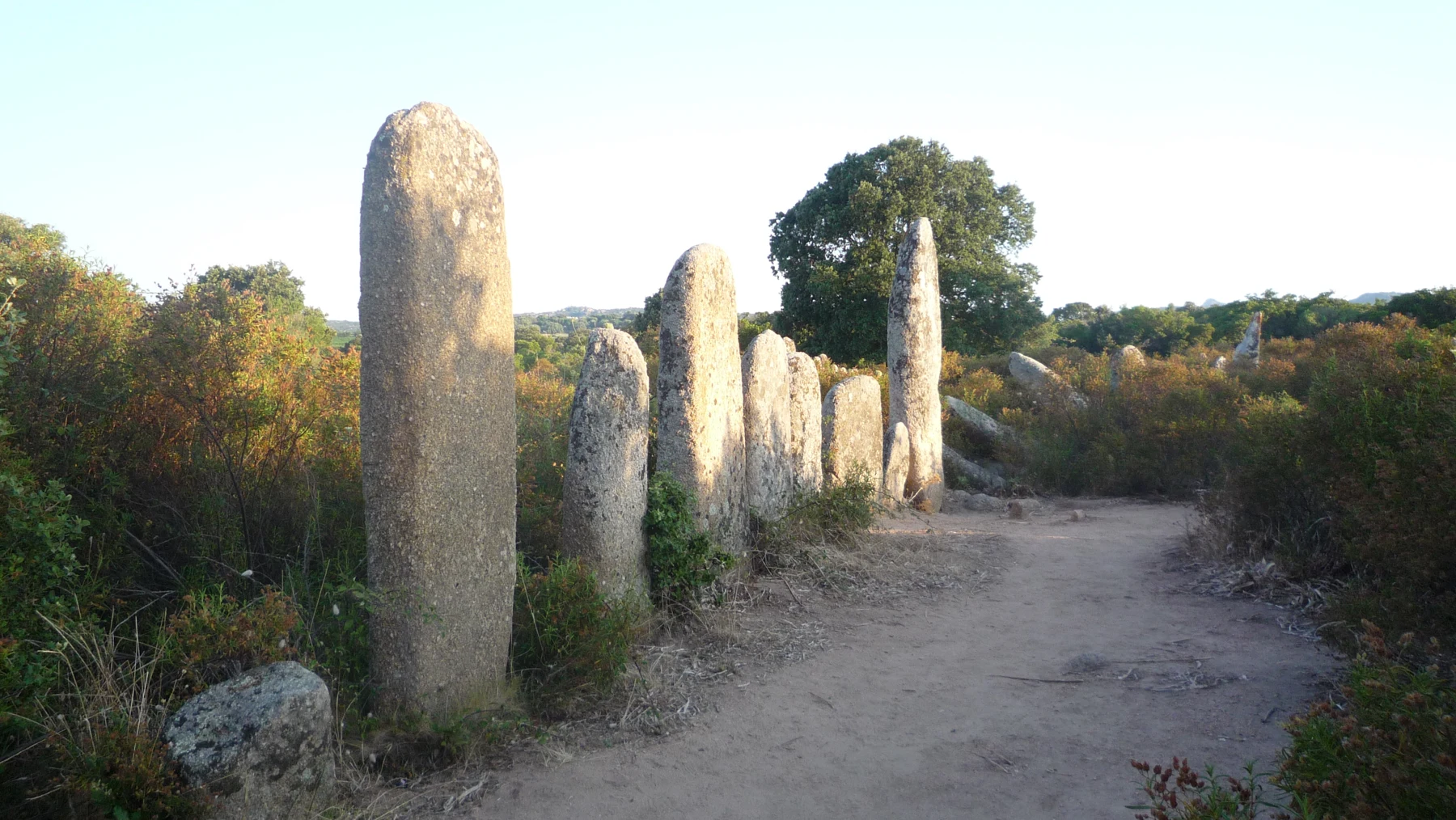
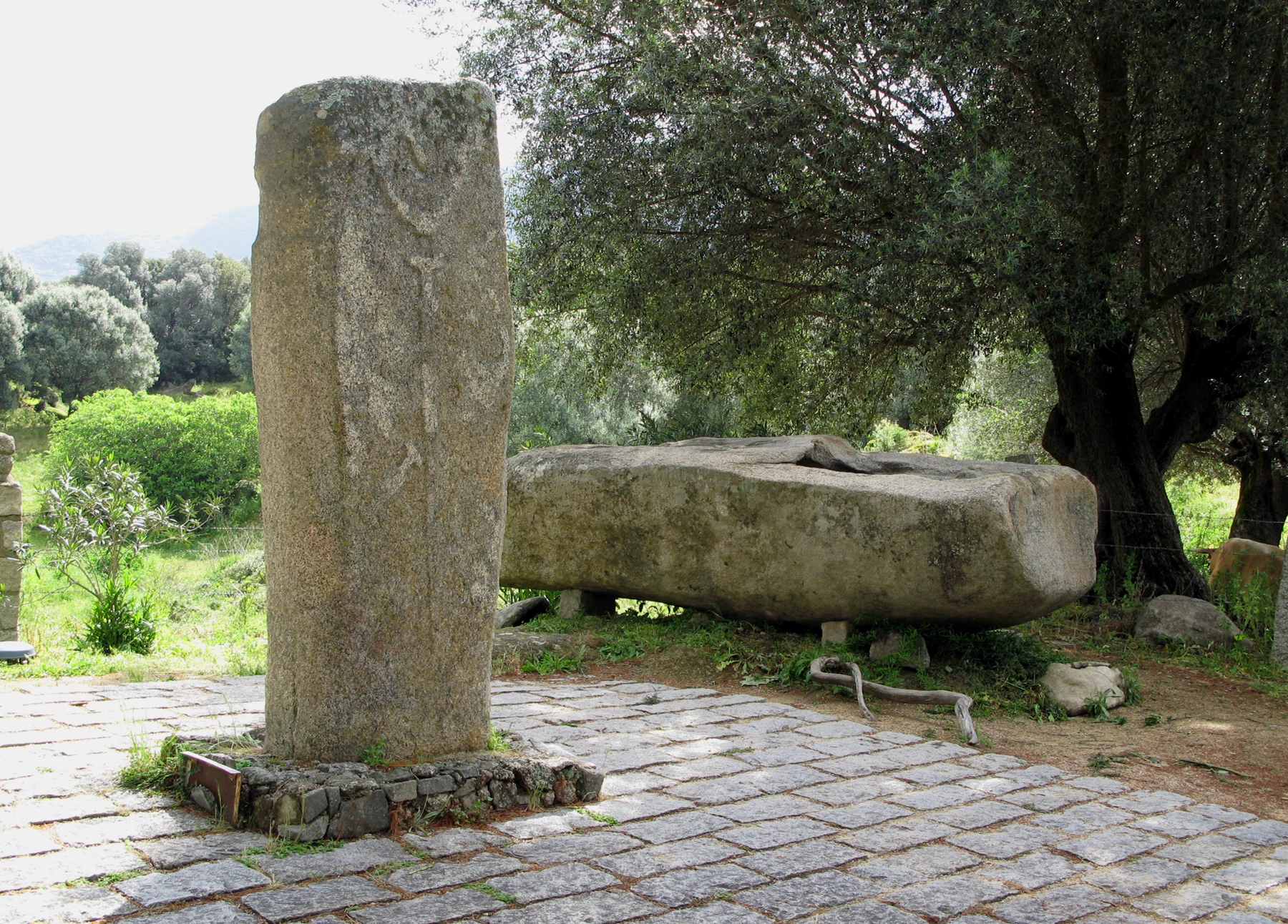
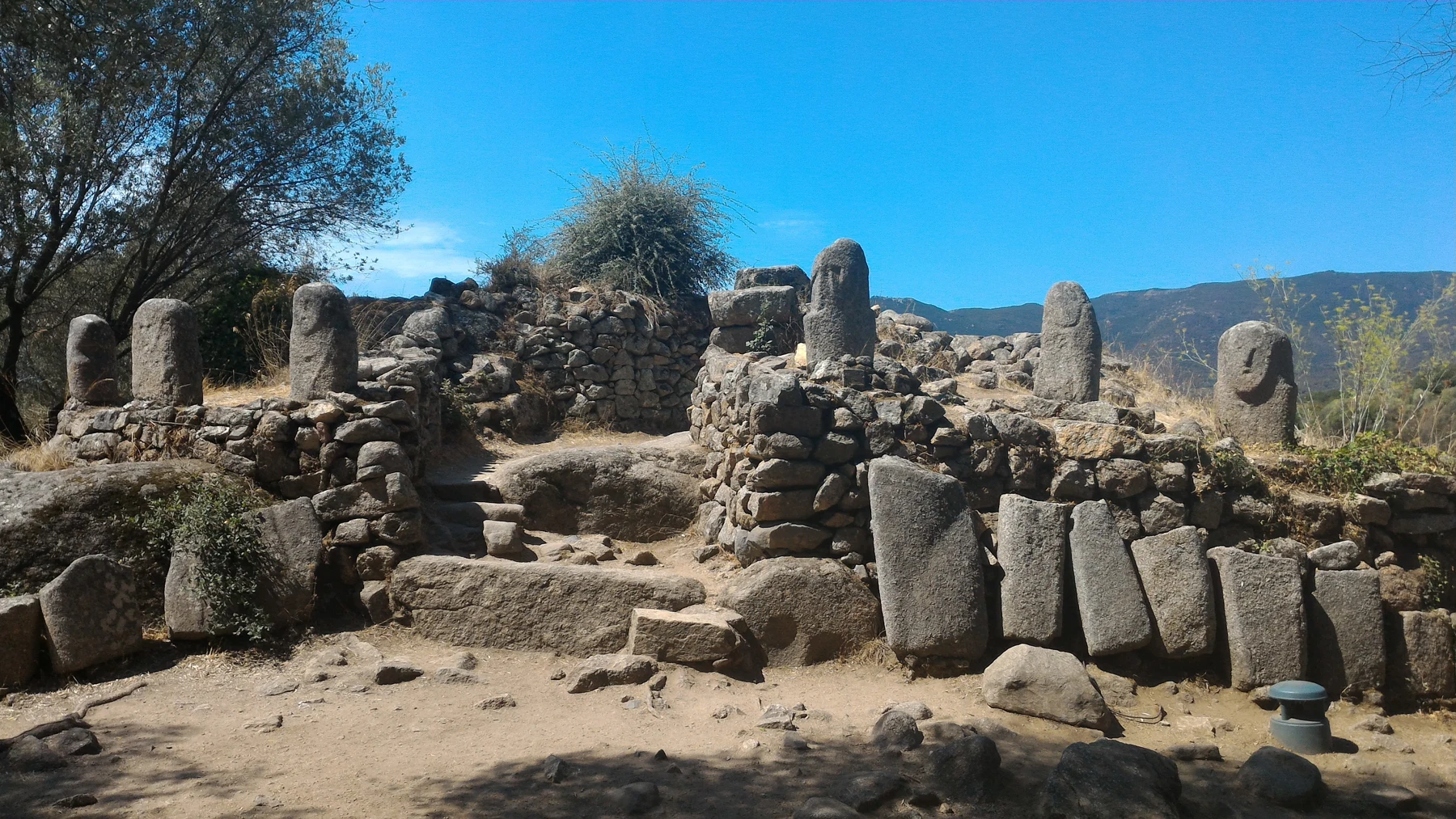
Open a place for its films. Cauria coverage includes time-lapse visits.
Across the Strait of Bonifacio
Two islands. Related questions.
Corsica lies directly north of Sardinia. Comparing individual features helps the eye; each monument still needs its own history.
Towers and stonework
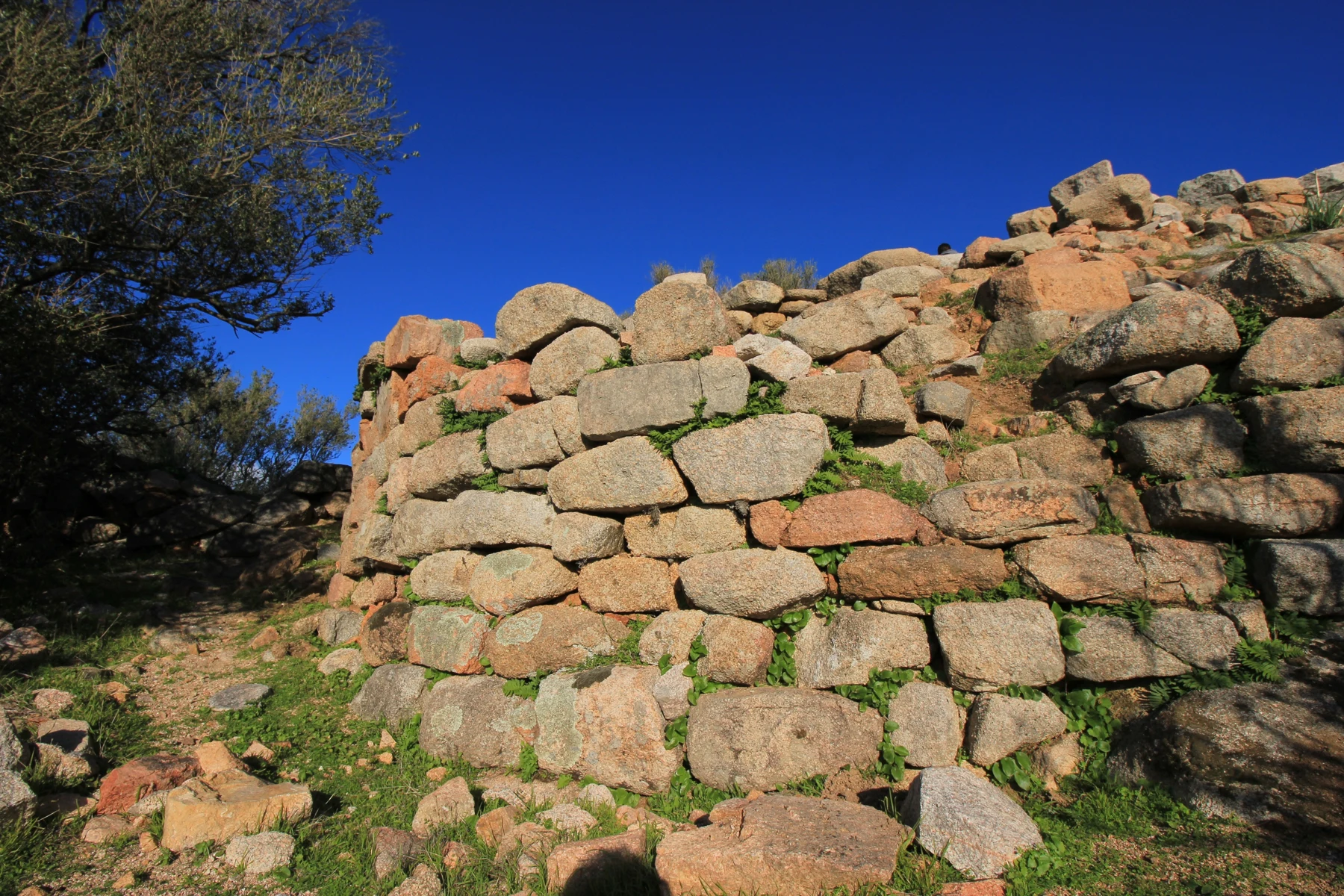
Torre and nuraghi
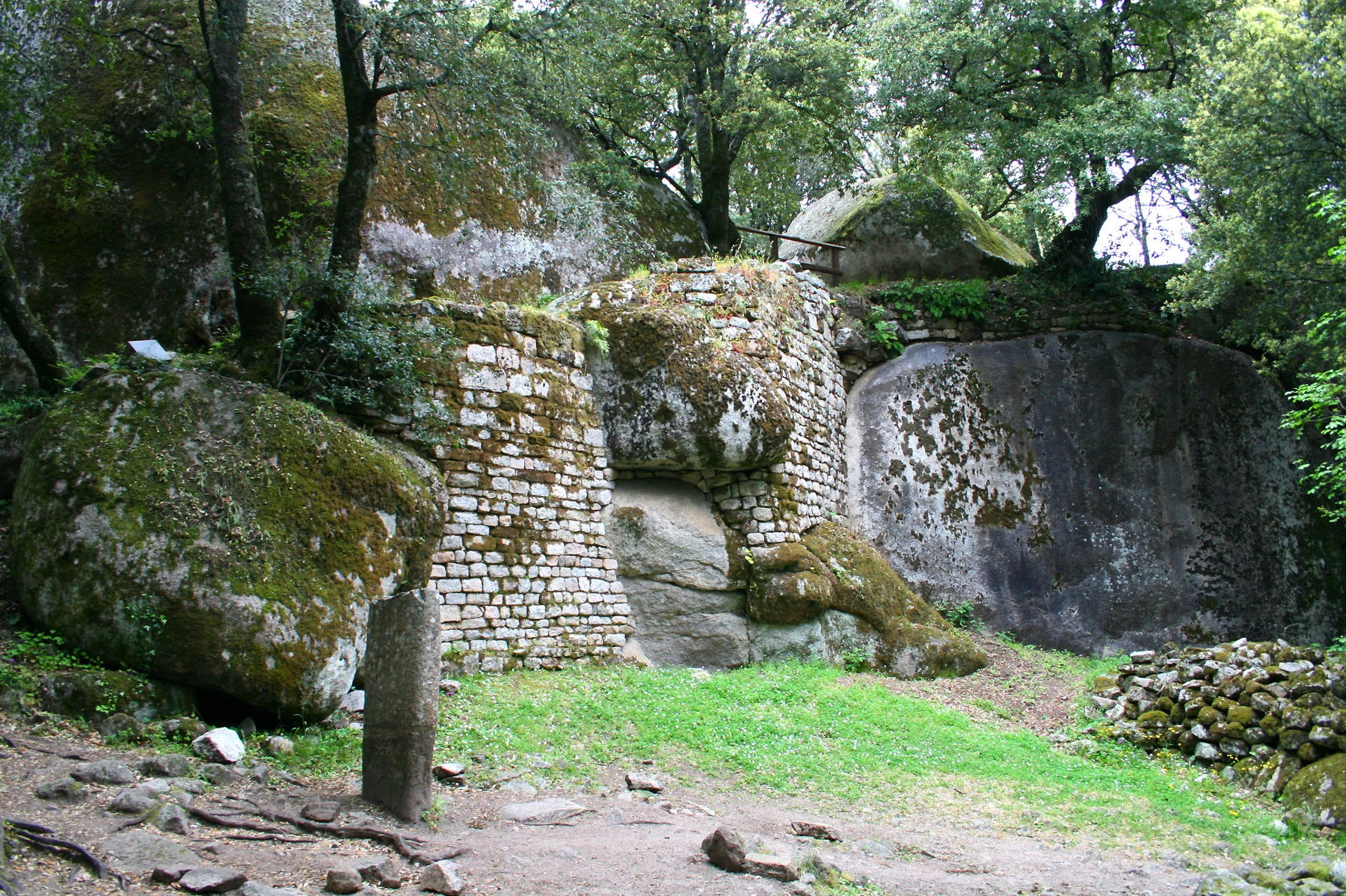
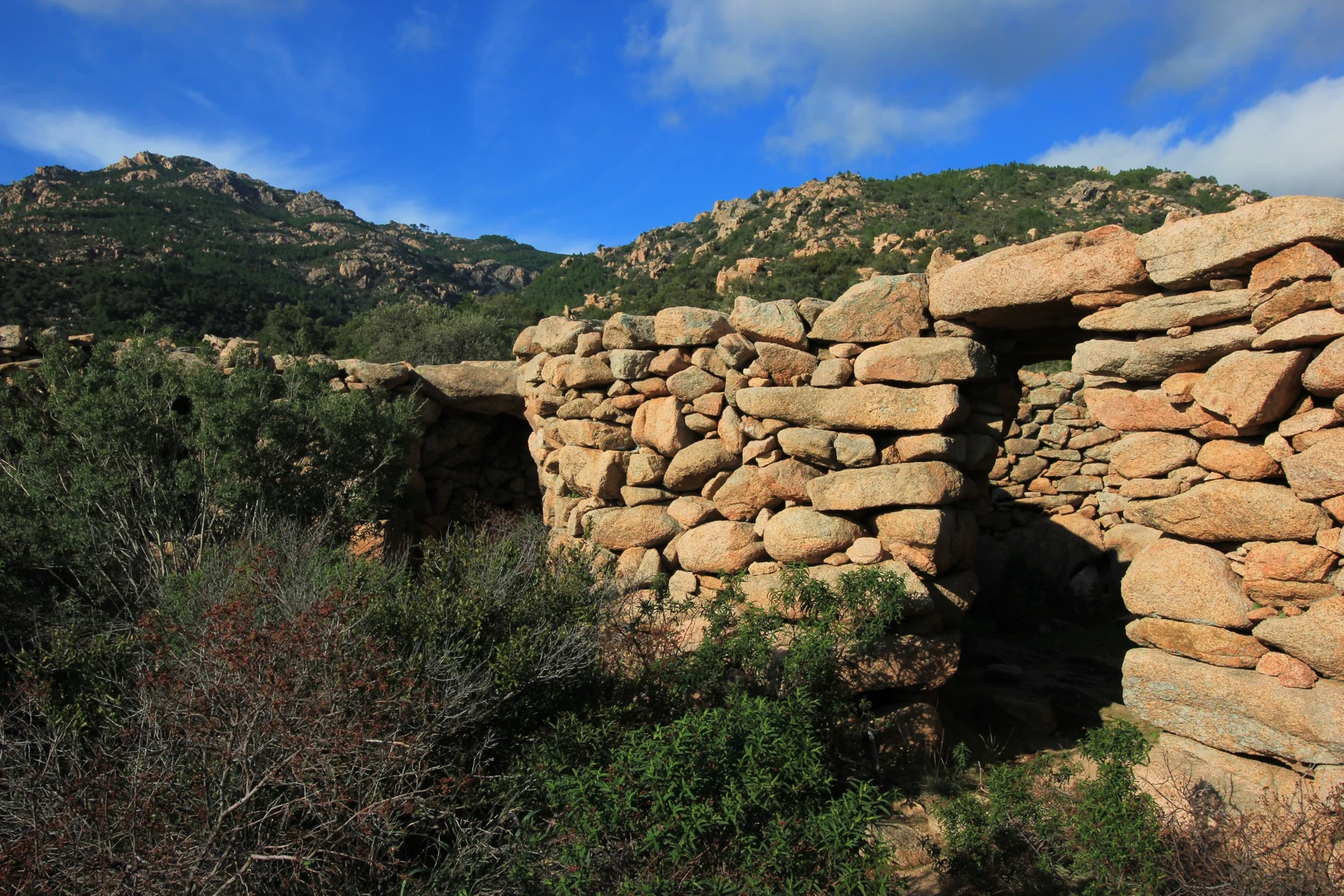
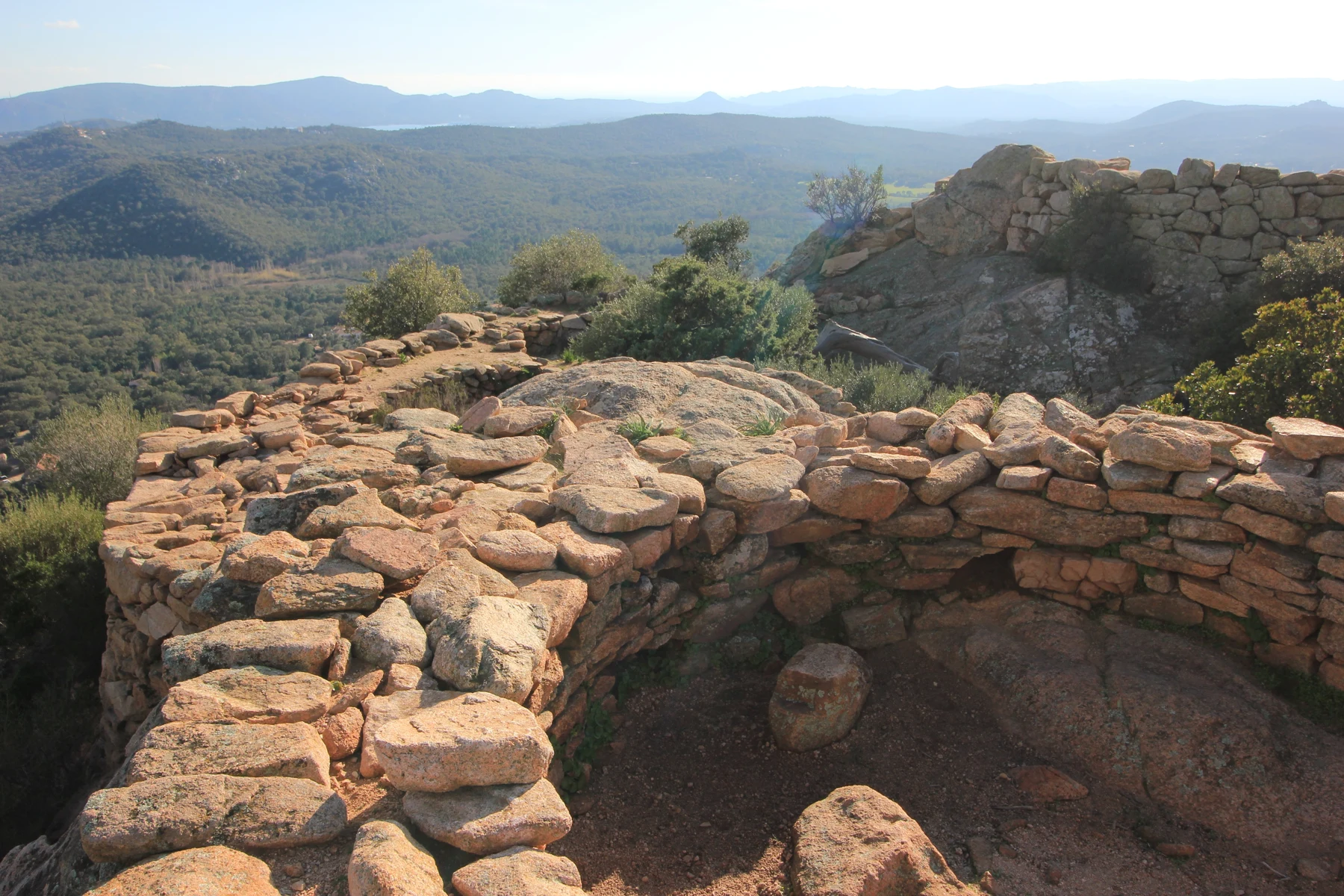
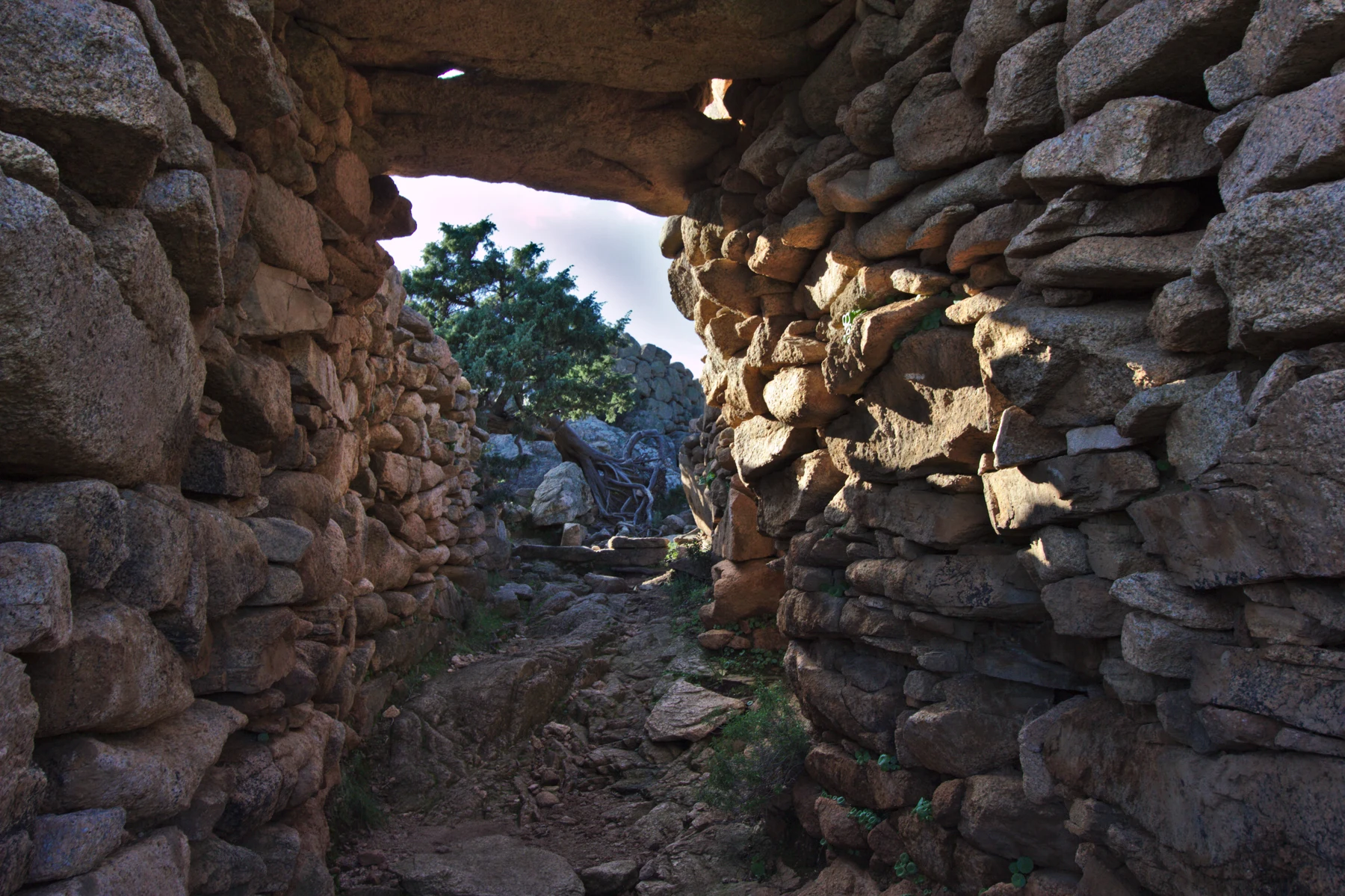
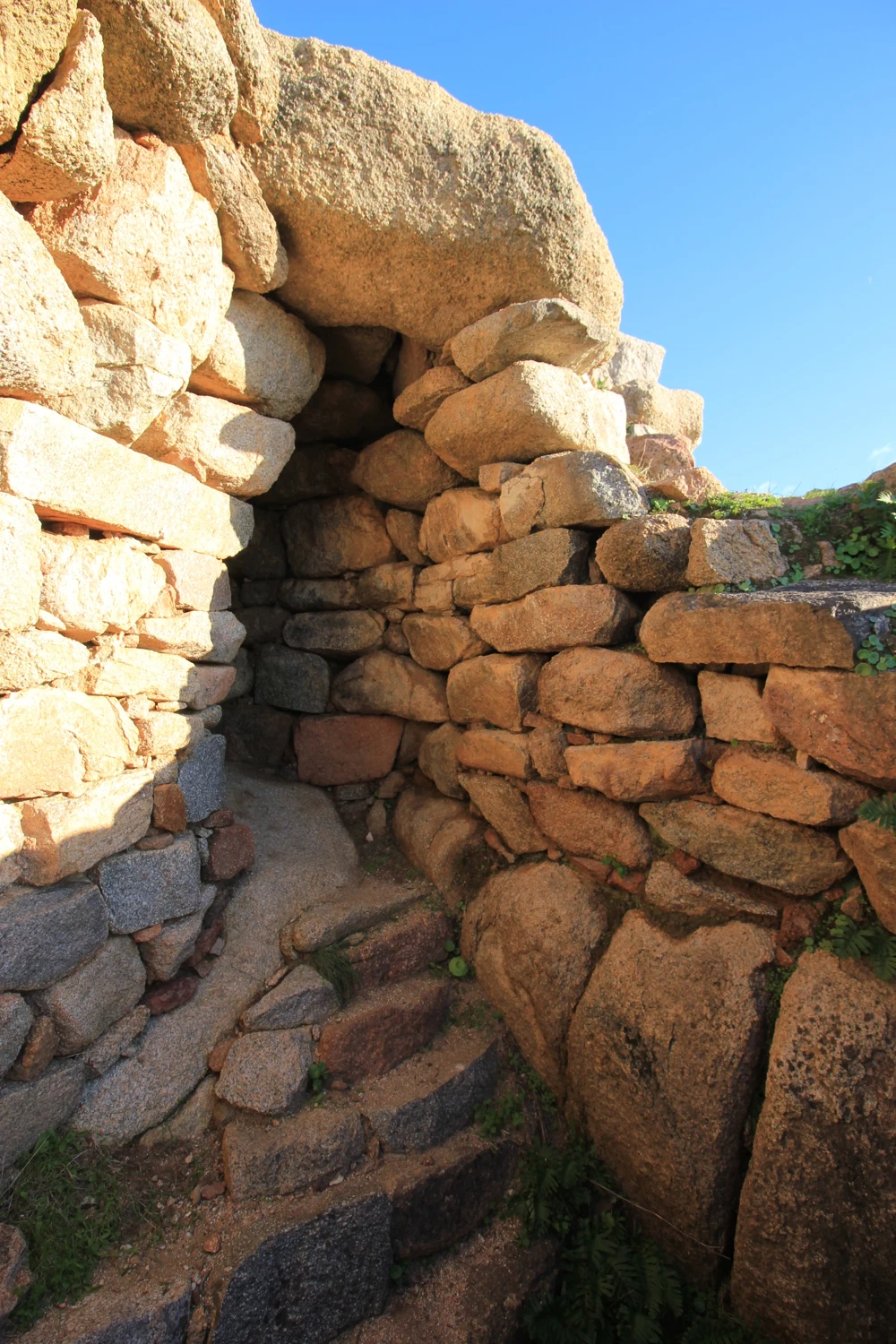
Corsican torre and Sardinian nuraghi share circular plans and corbelled stone roofing. The size and development of their complexes differ. Compare rooms, entrances and walls before drawing conclusions about purpose.
Megalithic burial
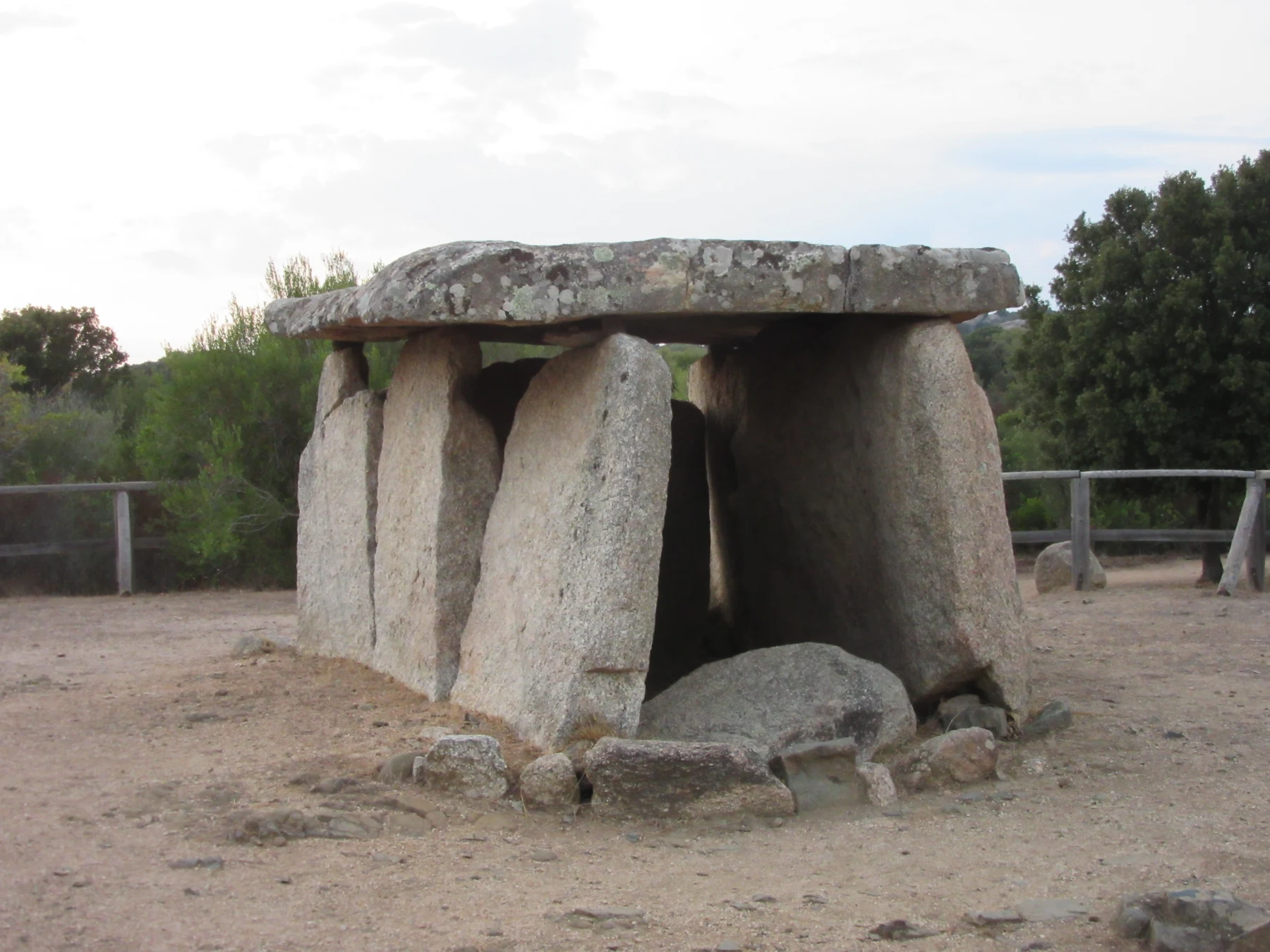
Large stones, different tombs
Funtanaccia is a dolmen with upright supports and a capstone. Sardinia’s Giants’ Tombs have their own distinctive form. The comparison concerns large-stone construction and collective burial.
What this survey has not matched
Keep the differences visible
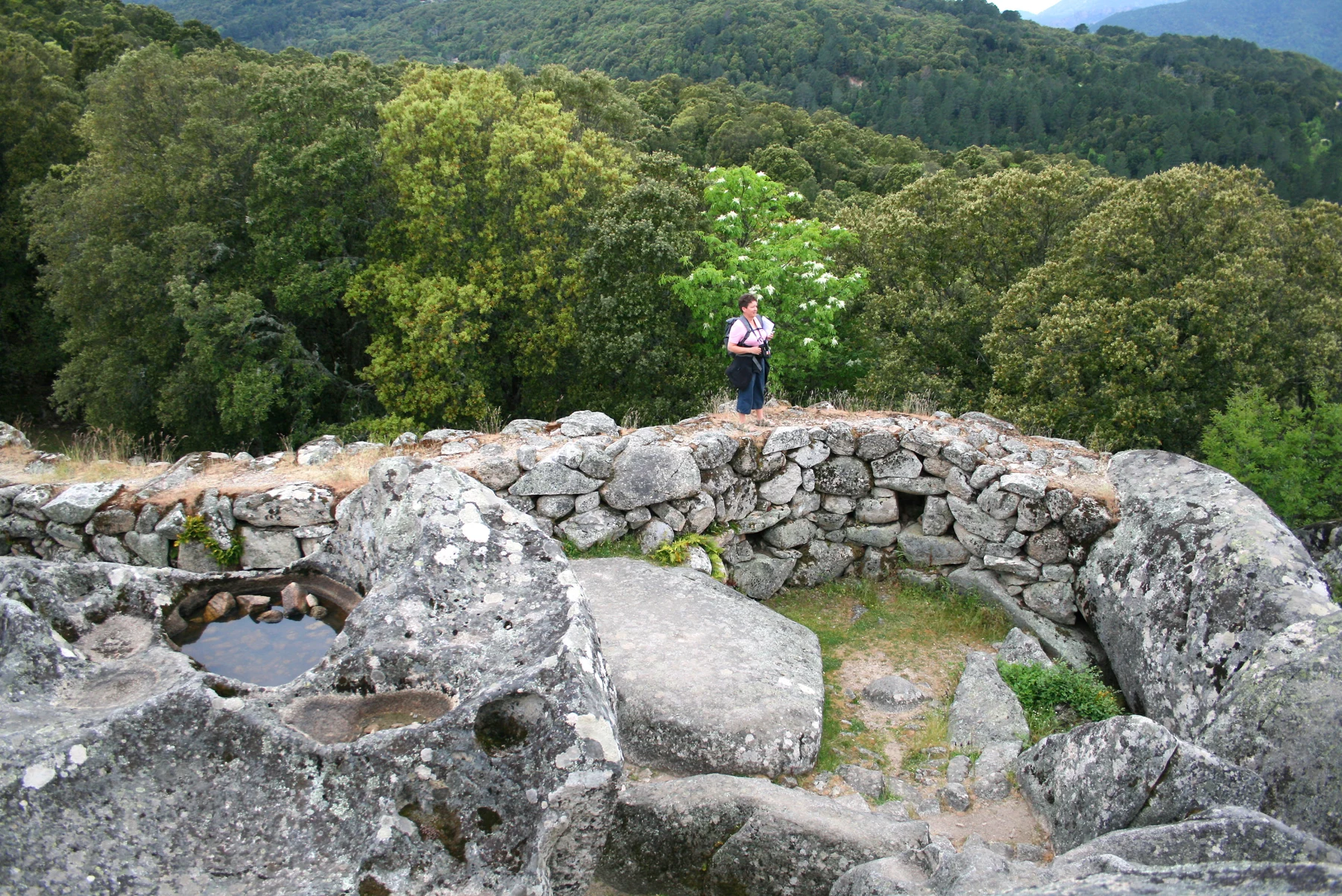
No close Corsican counterpart to Santa Cristina’s built sacred well or Sardinia’s decorated Domus de Janas was verified in this image survey. Natural granite shelters are a different feature.
The neighbouring island
Continue south to Sardinia.
Nuragic towers and the sacred well of Santa Cristina bring the comparison into focus.
Image-led research guide, reviewed 24 October 2026. The comparison follows the monument groups in Stone Riddles II. It is not a complete archaeological inventory of either island.
 The Ancient Atlas